
One small home, for the whole journey.
Most centres sort children by age and move them to a new room each year. At Manawa every child belongs to a HomePod, a home-like space where tamariki from 6 months to 6 years spend their days together with the same kaiako, the whole way through.
What is a HomePod?
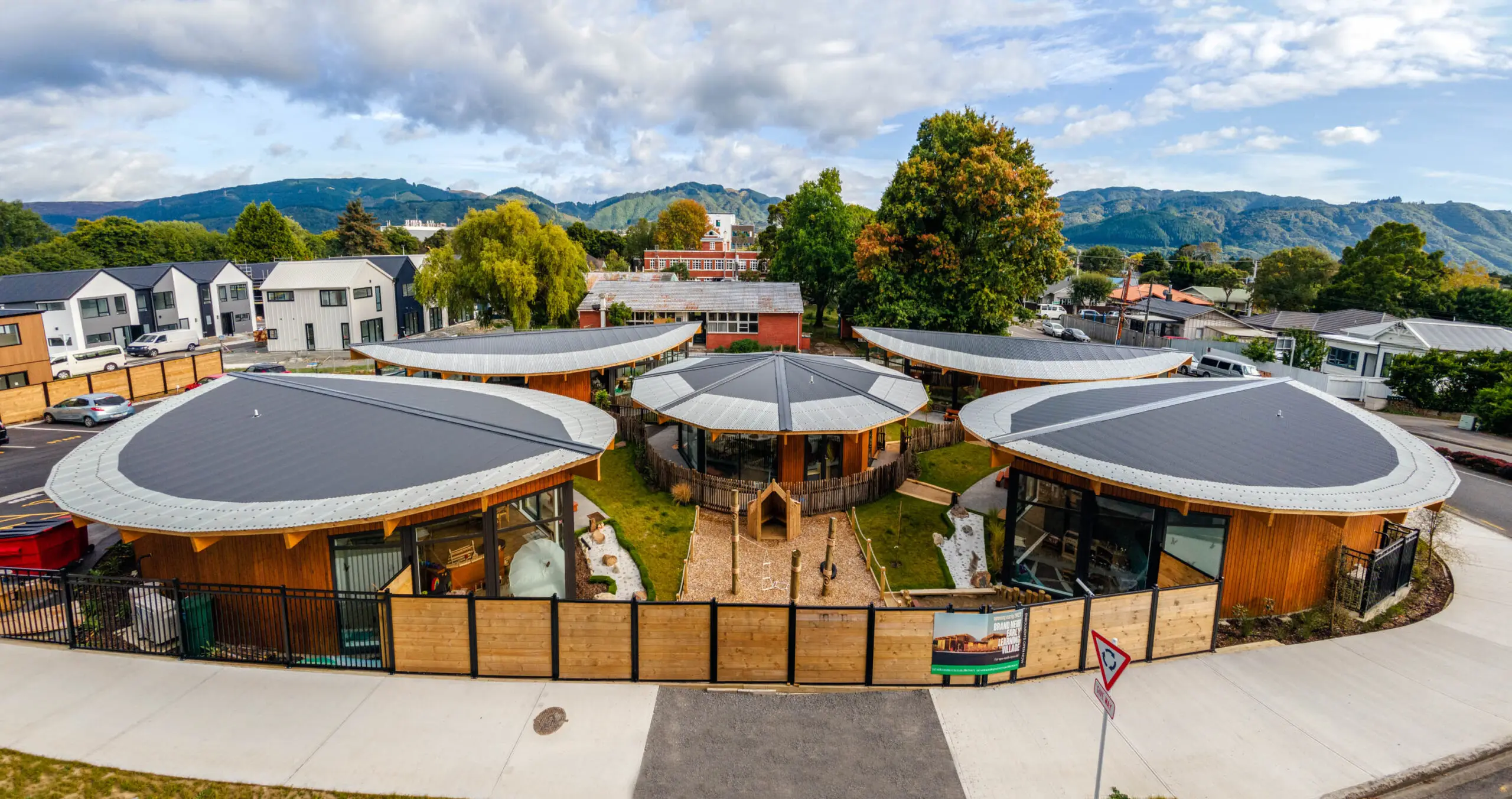
A HomePod is a small, mixed-age home inside the village. Each one holds up to 24 tamariki with five kaiako, and no more than eight pēpi under two.
Your child stays in the same HomePod from 6 months to 6 years. Younger siblings join the same one. There is no move to a new room every twelve months and no starting over with new adults. Specialist teachers support the HomePod kaiako as needs arise.
The HomePods sit around a shared whare at the centre of the village, the HeartPod, where the whole village comes together.
Why mixed ages, and why the same kaiako?
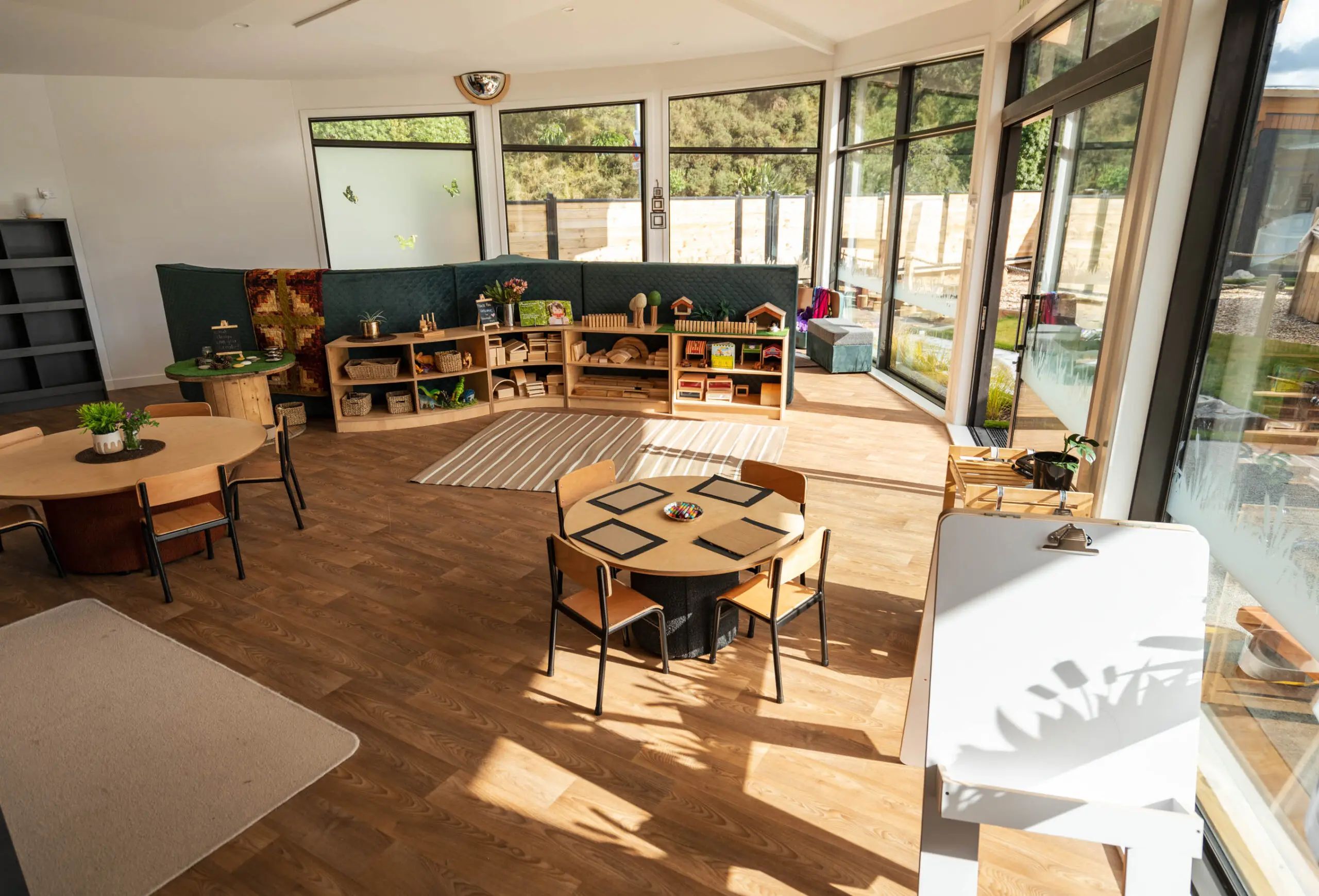
We set out to make big small again, and to return to the shape of a family. Babies grow up alongside older children. Older children learn to look after someone smaller.
Secure relationships are the foundation for all learning. Responsive caregiving in the early years shapes a child's capacity for emotional regulation, social confidence and compassion later in life. A child who knows the adults around them, and is known by them, is free to explore, play and wonder. The whole village is designed through that lens.
What are the ratios?
Five kaiako for every 24 tamariki, and at most eight pēpi under two in a HomePod. That is better than the ratios the Ministry of Education requires. More eyes, more lap-time, more time for the unhurried moments.
We require a three-day minimum enrolment so your child has the consistency to settle. The reasons, and the exceptions, are on the enrolment page.
What do the spaces look like?
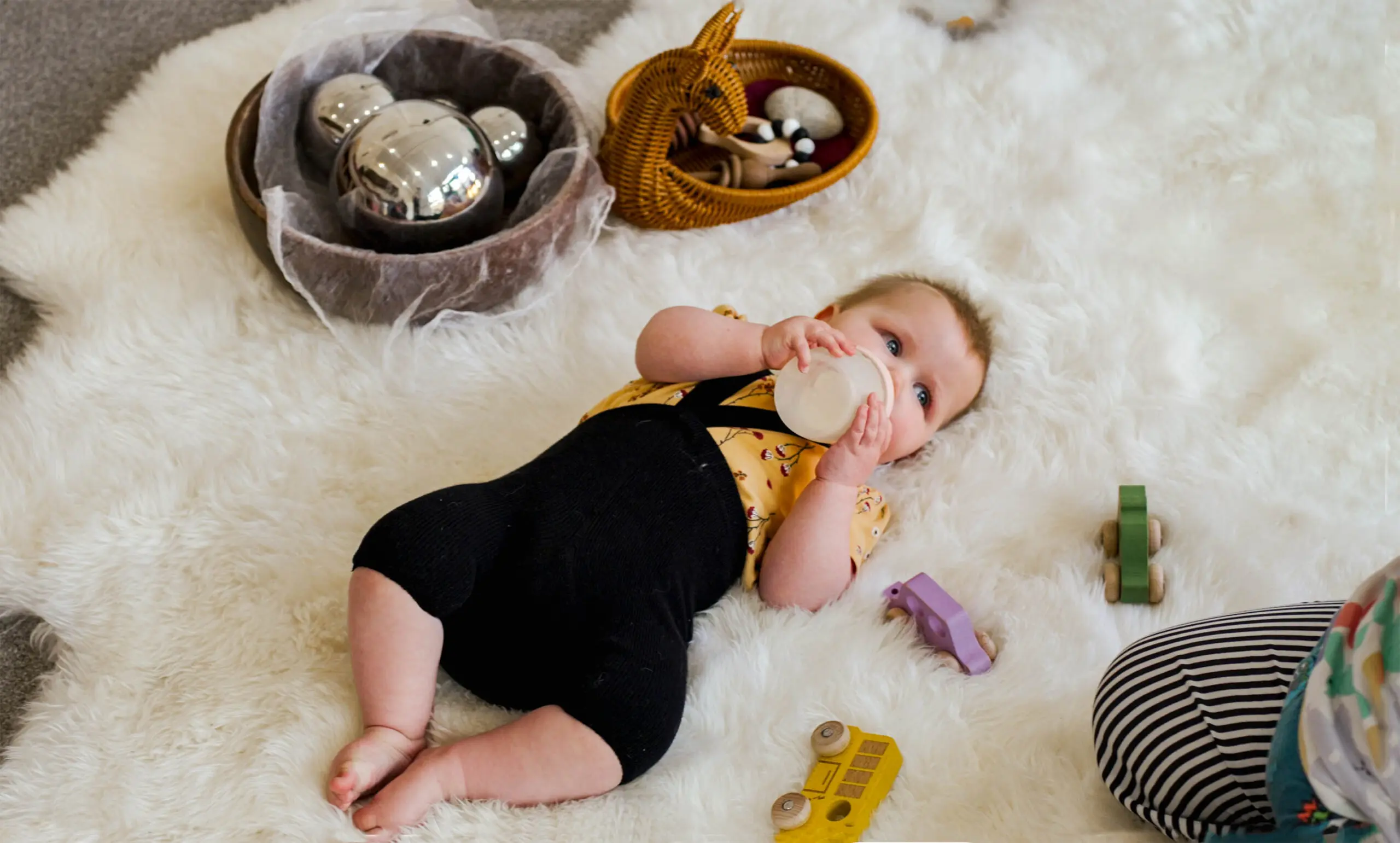
We call our rooms Living Spaces because they are designed to feel like the comfort and familiarity of a home. Natural light, living plants, earthy materials and views of the green space around us, following the principles of biophilic design. A home away from home, for children and for the adults who spend their days here.
At the heart of the village is the atelier, a dedicated art studio. Children express what they think and feel in many languages: drawing, clay, singing, building, role play. The atelier gives them the materials and the room to do it.
The village wellness space is for whānau and kaiako: workshops, gatherings and the everyday connections that make a village.
How much time do tamariki spend outside?
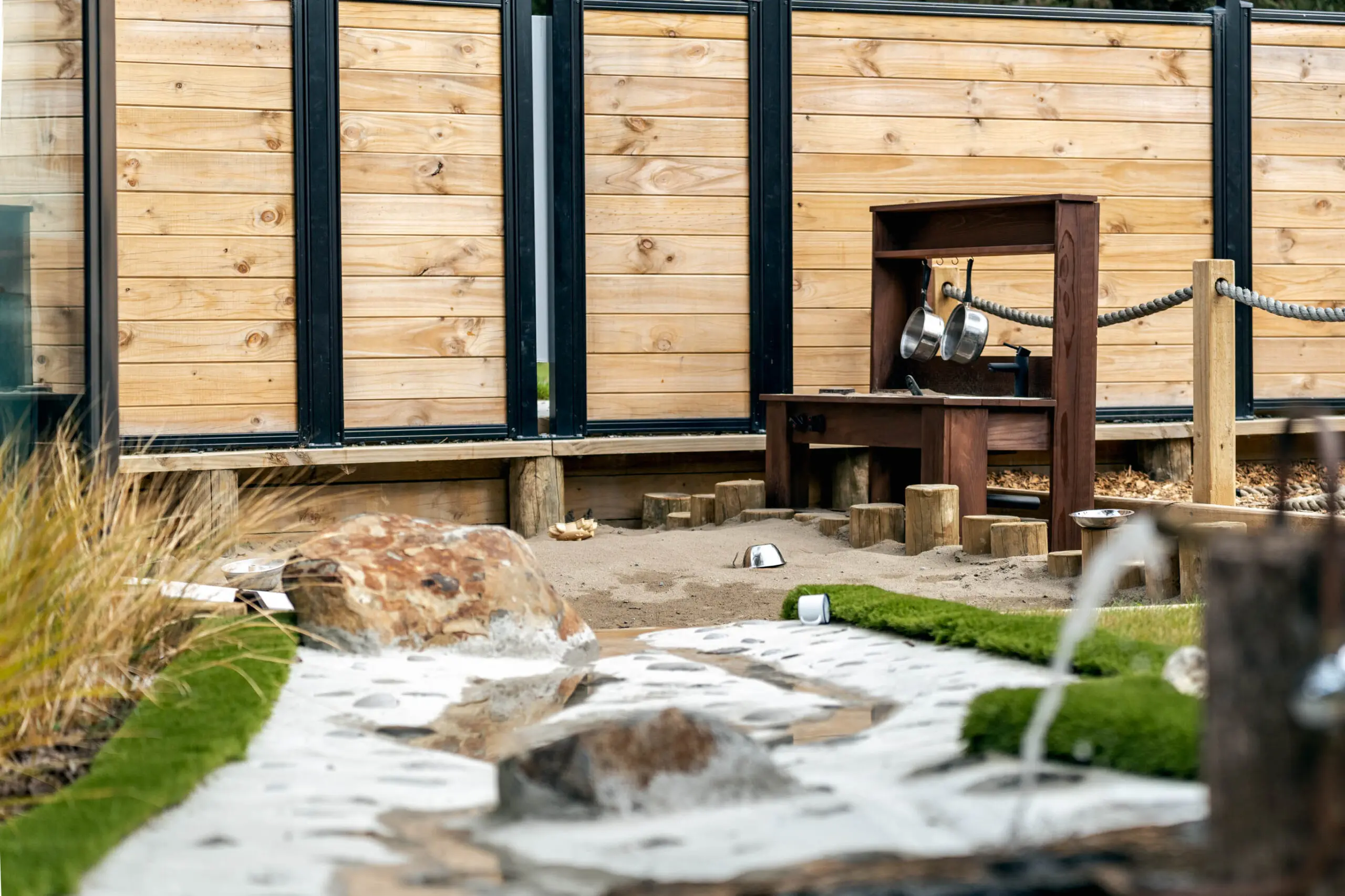
The village is surrounded by green space, hills and reserves, and our playground is landscaped as a garden rather than a playground. Every day includes time outside in it, in the sand and water, on the climbing frames, in the long grass along the fence.
We are building a forest programme for our four-year-olds: outings with kaiako to the local forest to build huts, play with sticks and stones, name birds and get muddy, coming to know the same patch of bush through the seasons. It is in its early days. Parents and grandparents who would like to come along as Forest Guardians are welcome.
What guides all of this?
Mauri aroha, the life force of love, is our compass. We live in a multicultural society with a bicultural foundation, and we are guided by a strong network of support to see the world through a te ao Māori lens. It shapes how we greet tamariki in the morning, how we eat together, and how we talk about the land we play on.
Five minutes here will tell you.